The Fictivize Method: Serialized Fiction
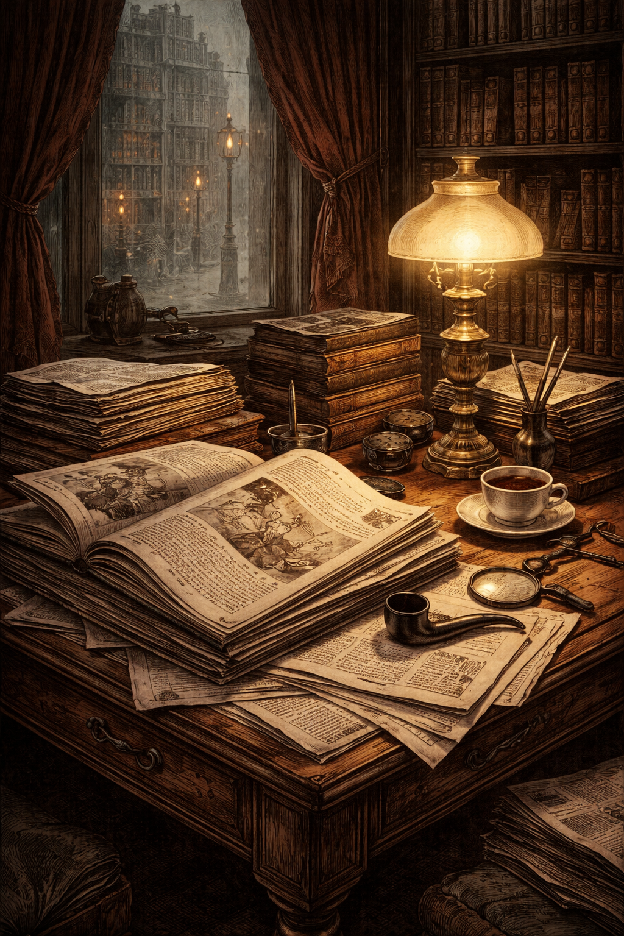
Fictivize is dedicated to the concept that the current model for publishing fiction is fundamentally broken. We have spoken to dozens of writers who have attempted to write a complete novel as their first major writing achievement. This is clearly not possible for most writers and evidence shows that the vast majority of writers simply abandon their projects without publishing them.
The entire idea of the novel and getting published harks back to the days when having a physical book printed was the only way to have your story told. This myth that novels are the correct way to tell stories persists to the current day.
However, it turns out that not all the stories we have read as novels started out that way. Many of them were originally released as serialized fiction.
Serialized fiction -- stories released in installments rather than all at once -- tends to flourish whenever the distribution channel (newspapers, magazines, or online platforms) makes frequent publication cheap and routine. The structure rewards momentum: quick re-entry, light recap, and cliffhangers that push readers toward the next issue.
A Brief History of Serialized Fiction
In the 1800s, industrial printing and rising literacy turned serialization into mass entertainment and sometimes mass persuasion. In the United Kingdom, Victorian part-issues and weekly periodicals created an ongoing feedback loop between writers and audiences. In France, newspaper feuilletons ran major novels in daily or regular installments, turning fiction into a habit tied to the paper's publication cycle. In the United States, serialization could also amplify political debate by reaching large readerships quickly.
By the late 1800s and into the 1900s, magazines globalized the model, while pulps, comics, and genre magazines kept installment pacing alive across formats. Late 20th-century publishers even revived "old-school" serialization as a deliberate event for modern readers.
The internet then made serialization frictionless and global: authors could publish directly on a schedule, build communities in comments, and iterate in public. Platforms have experimented with formalizing this too -- Amazon's Kindle Vella, for example, ultimately closed on February 26, 2025.
Famous Works That Started as Serialized Fiction
- The Count of Monte Cristo -- serialized in Journal des debats, 1844-1846.
- Uncle Tom's Cabin -- ran as a ~40-installment serial in The National Era starting June 5, 1851.
- A Tale of Two Cities -- serialized in All the Year Round, April 30-Nov 26, 1859.
- The Adventures of Sherlock Holmes -- stories first published monthly in The Strand Magazine, 1891-1892.
- The War of the Worlds -- serialized in Pearson's Magazine (UK) and Cosmopolitan (US) in 1897.
- Foundation -- began as linked stories/novellas in Astounding Science Fiction, 1942-1950.
- The Martian -- first released chapter-by-chapter on the author's blog/website.
This history tells us that serialized fiction can be a powerful tool for authors who have a story to tell but aren't ready to sit down and write an entire novel.
Getting Started
The important thing is getting words on the page. If you have a story to tell, it really doesn't matter what your writing process is. Some writers thrive in a highly structured process where the entire plot and all the character arcs are well defined at the beginning. Other writers prefer a looser process where they let the story unravel as it gets told. If you haven't written fiction before, experiment a bit. Try different processes and methods to see which one works for you. In the end, if it works for you, that's the right process.
Set a Schedule
Once you get started, give yourself a schedule. We prefer releasing one episode per week because that keeps your audience engaged. However, there is no correct cadence. You want to think about a pace you can maintain indefinitely. If you are writing a novel length story, you will eventually have over 100k words. So, this is a marathon, not a sprint. Don't worry about the larger picture at this point, just focus on getting words on paper.
Discover Your Audience
The next step is to discover your audience. Are there people interested in reading the story you want to tell? Who are these people? In the end, your story is your product. Even if you're not planning on making a living as a writer, you'll want people to read it. One of the advantages of serialized fiction is that you can engage with your potential audience before you complete the work.
Engage With Your Readers
After you have identified who your potential audience is, engage with them. Ask for input. Do they like your story? Did they find the narrative confusing? Did you make some technical error? By having the support of an engaged community, you can answer questions like this as you go and correct any mistakes you made. Remember, the goal here is to tell your story. Being perfect the first time isn't a reasonable goal. We learn by doing. The first time may not go well, but that's how we learn.
Write Every Day
As you progress in telling your story, you'll learn how to be a better writer. We strongly urge you to write as often as possible. Ideally, you will write daily. Sometimes your work on a given day won't be great, but you need to be in the habit of writing every day.
This also means that you're going to be a better writer at the end of the story than at the beginning. That's OK, you can go back and revise. It's really critical that you read the entire story from the beginning every so often. It's common to find issues, inconsistencies or just things you wish you did better upon further reading. Again, there is no hard and fast rule, but we would suggest going back after every ten episodes.
Episode Length and Structure
Just like overall writing process rules, episodes can be almost any length. Generally, we recommend that episodes have a complete scene so they're more interesting for the reader, but there are no hard and fast rules here. Some writers like to end episodes on a cliff hanger or perhaps end on a particularly exciting note. It's up to you, but one consideration is to keep your reader interested and coming back for more episodes.
One thing to keep in mind is that Fictivize (like almost all publishers) is focused on word count, not pages. We don't track how many pages you've written because a page is a pretty nebulous thing online. If you read a story on a mobile device, the screen is tiny and thus pages are small. But if you have a massive 30 inch monitor, you could have an entire episode on the screen at one time. For this reason, we don't track or report pages, only word count. You will find similar issues with publishing platforms like Kindle which have a variety of form factors.
Using Fictivize
Fictivize is intentionally simple to use. You will need to create a writer account first. Either select "writer" when you create your account, or go to your profile page and upgrade yourself to a writer account. There is no charge for writer accounts.
Once you've logged in with your writer account, click on my stories at the top of the page. From there, you can click on create new story to begin. Note that stories are draft by default. You can wait until you're happy before you publish. So, don't worry if it's not perfect at first. However, you will need a title! So think about what you want to call your story.
Cover Art Matters
You will want to have a nice cover image for your story. People are very visual and they are much more likely to click on your story if it has a good cover image. You can create your own image, buy a picture online or use AI to create the cover image. However you do it, be sure that the cover image gives a general impression of how the story will be. For example, if the story is an exciting military action story, put a picture that includes some action and perhaps a combat scene. Similarly, if the story is a very romantic intimate portrait of two people, you may want to show a picture of two people obviously in love.
Write a Great Description
The next most important thing is the description. The only way people decide to click on your story are the cover art and the description. So, the details matter. Think about why people would be interested in your story. Why is your story interesting? What makes it different? What's the most important thing you want them to know before they read?
Start Publishing Episodes
Now that you have the story set up, you can start writing episodes. Again, by default the episode is in "draft" mode. We won't publish until you tell us to do so. It's up to you, but we find that most authors do best if they write a couple of episodes first before they publish. Then, you can publish episode 1 and schedule future episodes. Either way, you can control episode status by using the dropdown box at the bottom of each episode.
We look forward to reading your stories! If you have any problems, please email us at info@fictivize.com.
Ready to get started? Create your writer account and start your first story today.